
India–Austria Relations Enter a New Era: Business, Technology, and Trade Take Center Stage
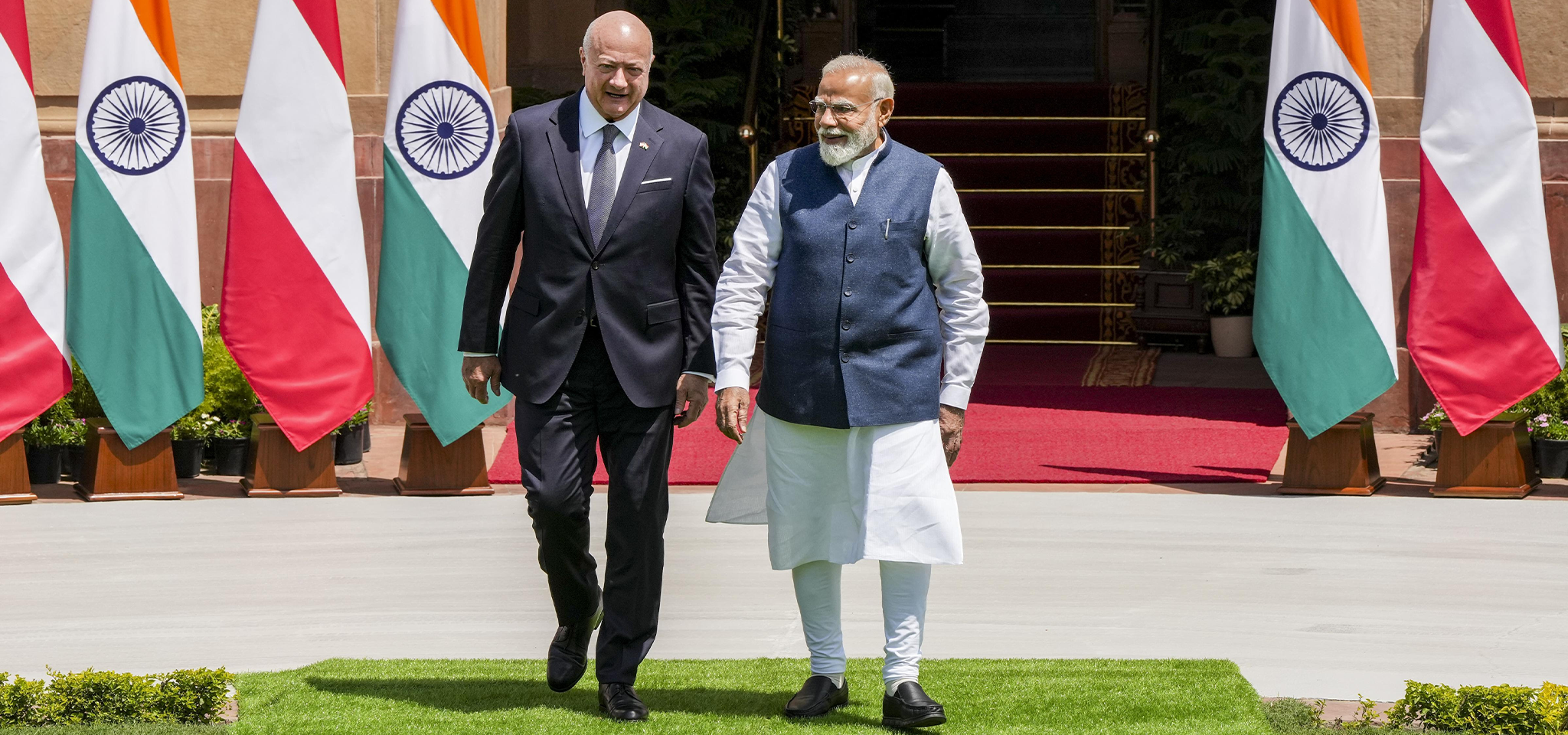
In April 2026, bilateral relations between India and Austria received a major strategic boost with the official visit of Austrian Federal Chancellor Christian Stocker to India — the first visit by an Austrian Chancellor to India in over four decades.
The visit marked a significant milestone in the evolving India–Austria partnership and reinforced the growing importance of Central Europe in India’s broader European engagement strategy.
The visit came at a particularly important geopolitical and economic moment. With the recently concluded India–EU Free Trade Agreement creating new momentum for India’s engagement with Europe, Austria is increasingly positioning itself as a gateway to Central and Eastern Europe for Indian businesses, while India is emerging as a critical innovation, manufacturing, and technology partner for Austrian enterprises.
A Strategic Reset After Four Decades
The visit by Chancellor Stocker followed Indian Prime Minister Narendra Modi’s landmark visit to Austria in 2024 — itself the first visit by an Indian Prime Minister to Austria in more than 40 years.
Together, these reciprocal visits have laid the foundation for what both governments now describe as the “Enhanced India–Austria Partnership.”
During the visit, Chancellor Stocker held bilateral talks with Prime Minister Modi in New Delhi and also met Indian President Droupadi Murmu at Rashtrapati Bhavan.
The Austrian delegation included senior ministers, scientific experts, and a large business delegation — a clear indication that economic cooperation was a central pillar of the visit.
Trade and Investment: The Core Business Message
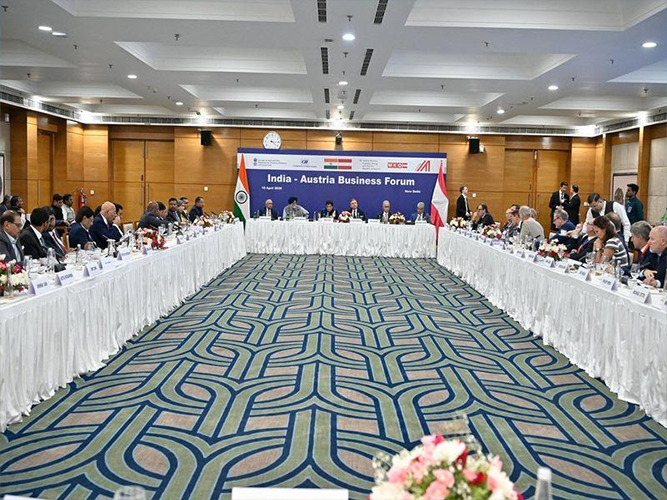
One of the strongest themes emerging from the visit was the intent to deepen bilateral trade, investment, and industrial collaboration.
Austria already has a strong engineering and industrial footprint in India. Austrian companies have contributed to several high-profile Indian infrastructure projects, including tunnelling, railways, ropeways, and urban mobility initiatives.
Prime Minister Modi specifically referenced Austrian participation in projects such as the Delhi Metro, the Atal Tunnel, and the Girnar Ropeway.
According to Chancellor Stocker, over 160 Austrian companies are currently active in India across sectors such as:
- Infrastructure engineering
- Renewable energy
- Automotive manufacturing
- Industrial automation
- Semiconductors
- Sustainable urban development
Bilateral trade between India and Austria has reportedly crossed approximately €3 billion over the last decade, with both countries now seeking to scale cooperation into higher-value innovation-led sectors.
The two sides emphasized opportunities in:
- Green energy and hydrogen
- Advanced manufacturing
- AI and machine learning
- Semiconductors
- Biotechnology
- Quantum technologies
- Smart infrastructure
- Cybersecurity
- Financial services and fintech collaboration
India–EU FTA and Austria’s Emerging Strategic Role
A major backdrop to the visit was the newly concluded India–EU Free Trade Agreement.
Both Indian and Austrian leaders repeatedly highlighted that the agreement could unlock a new phase of trade and investment cooperation between India and Europe.
For Indian businesses, Austria offers several strategic advantages:
- Central European market access
- Advanced industrial and engineering capabilities
- Strong R&D ecosystem
- Access to EU supply chains
- High-value manufacturing partnerships
- Stable regulatory environment
For Austrian firms, India represents:
- A large and fast-growing domestic market
- Manufacturing scale
- Skilled engineering talent
- Startup innovation ecosystems
- Digital public infrastructure capabilities
This complementary positioning was repeatedly emphasized during the bilateral discussions.
Startup, Innovation, and Technology Collaboration

Technology and innovation cooperation emerged as another major pillar of the visit.
The leaders reaffirmed support for the “India–Austria Startup Bridge,” launched in 2024 to strengthen collaboration between startups, investors, universities, and innovation ecosystems in both countries.
Several technology-focused initiatives were also announced or expanded, including:
- Cybersecurity dialogue mechanisms
- Joint R&D initiatives
- Space sector collaboration
- Semiconductor ecosystem cooperation
- AI governance and trusted AI discussions
- Engineering and technical education partnerships
A notable academic collaboration announced during the visit was the Memorandum of Understanding between Indian Institute of Technology Delhi and Montanuniversität Leoben.
Austria’s leading technical universities — including TU Wien and TU Graz — also announced a “Focus India” initiative aimed at attracting Indian engineering students and strengthening technical collaboration.
Mobility, Talent, and Skilled Workforce Cooperation
Another important business-related outcome was the strengthening of mobility and workforce cooperation between the two countries.
Building on the India–Austria Migration and Mobility Agreement signed earlier, the two countries announced initiatives to facilitate mobility in sectors such as healthcare, engineering, and skilled vocational trades.
The launch of the India–Austria Working Holiday Programme is also expected to improve youth exchanges and create stronger people-to-people business linkages over time.
Why This Matters for Indo–DACH Business Relations
The significance of the visit extends beyond bilateral diplomacy.
Austria occupies a unique position within the DACH region as a highly industrialized, innovation-driven economy with deep expertise in advanced manufacturing, sustainability, industrial engineering, mobility systems, and environmental technologies.
For Indian MSMEs, startups, and technology firms, Austria can increasingly serve as:
- A strategic entry point into the EU market
- A collaboration hub for deep-tech innovation
- A gateway to Central and Eastern Europe
- A partner ecosystem for sustainable industrial transformation
For Austrian and broader DACH-region firms, India offers scale, digital capability, engineering talent, and supply-chain diversification opportunities.
The visit signals a broader shift: India–Austria relations are evolving from traditional diplomatic ties into a more commercially integrated, innovation-centric strategic partnership.